

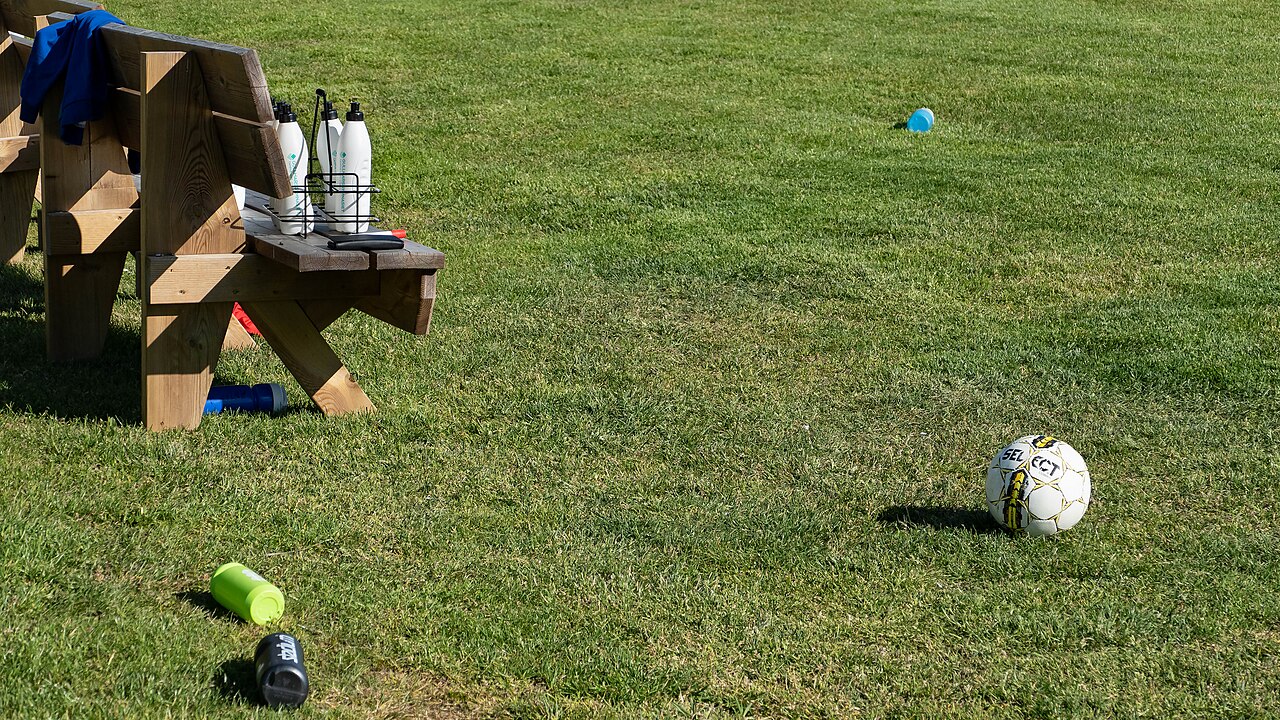
Registration is only the first line of the bill. Here is what a season of youth sports typically costs, item by item, and where the budget tends to grow.
Before you sign a child up for a season of sports, the number that matters is rarely the one on the registration form. The fee is only the first line of the bill. Equipment, travel, snacks, and the steady pull to add one more camp or lesson can multiply the total. Knowing where the money goes makes it easier to budget the whole season before the first practice.
The Sticker Number: Registration Fees
A participation fee, sometimes called a pay-to-play fee, is a charge a school or league requires before a child can join a team. These fees vary widely. Schools may charge $10 per sport or several hundred dollars, according to the National Federation of State High School Associations. Some schools bill per sport, others charge one payment that covers every sport for the school year, and some districts cap the total a family pays when more than one child plays.
Rules differ by state. California is the only state with a statewide law prohibiting public schools from requiring participation fees for school activities, a rule in place since 2011, while in Colorado every school district imposes them at some level, and 69 percent of Wisconsin schools reported charging to participate. A study of state laws found that at the end of 2016, 18 states had laws covering sports participation fees, and nine of those states provided for waivers for students who cannot pay. Ask your school district or league office what applies where you live and whether a waiver exists before you assume the fee is fixed.
Club sports work differently. These are private teams outside school, and their fees are set by the organization running them, so the range is much wider.
Equipment: What’s Required and What Can Wait
Registration usually covers coaching, field or gym time, and officiating. It rarely covers gear. What you need depends on the sport: cleats and guards in one, rackets and shoes in another, and helmets or pads where contact is involved. The league’s pre-season list should separate required items from optional ones, so start there before buying anything.
Two trade-offs shape this line item. Used equipment can cut the cost sharply, but safety gear deserves extra scrutiny, since worn or outdated protective items may not perform as intended. Children also grow fast, so the shoes that fit in September may not fit by spring. Buying the minimum required set first, then adding items only if the season demands it, keeps this cost from ballooning. If a sale or a friend’s recommendation tempts you toward gear the coach never asked for, the 24-hour rule is a simple way to separate a real need from an impulse buy.
Uniforms, Team Fees and Small Recurring Costs
Uniforms are unpredictable. Some programs include them in the registration fee, some charge separately, and some require families to buy specific items such as practice shirts or team bags. Ask in writing what the fee covers and what it does not.
Beyond uniforms, a season collects small charges that are easy to underestimate: team snack rotations, photo packages, tournament admission for spectators, spirit wear, and end-of-season gifts for coaches. None of these is large on its own. Together they behave like a slow leak in the budget. A simple fix is to set one number at the start of the season for all of these extras, and when it runs out, the optional purchases stop.
Travel: Where Youth Sports Budgets Really Grow
Local recreation leagues and school teams mostly stay close to home. Travel and club teams do not, and the numbers show it. A USA Today article published in 2017 put a year of travel baseball or volleyball at $8,000 or more for a single family, with high-end soccer programs running close to $5,000. A TD Ameritrade study found some parents paying $100 to $500 a month for club participation, and about 20 percent spending $1,000 a month.
The Aspen Institute’s Project Play survey found the average youth sports parent spent $883 on one child’s primary sport in a single season, and that travel and lodging for non-local play were among the main drivers of rising costs. It also found that parents earning $150,000 or more spent 83 percent more on travel than families earning under $50,000, which tells you how much of the spending gap is travel alone.
There is a debt risk here. Coverage of travel sports found that roughly six in ten travel ball parents said they would take on debt so their children could keep playing year-round. Before joining a travel program, ask for the full season total, including hotel nights, meals on the road, and entry fees for spectators, not just the team dues.
Lessons, Camps and the Pressure to Add More
Private instruction and camps are a separate line from team fees, and the Aspen Institute’s survey identified them as a key reason costs keep climbing. Sponsors of a federal bill called the Let Kids Play Act noted that youth sports costs have risen 46 percent in five years, with some families paying more than $5,000 per child each year.
The trade-off deserves honest math. Fewer than 6,000 of the more than 540,000 boys playing high school basketball in a given year reach the NCAA Division I level, which works out to roughly one percent. About 2.8 percent of the one million-plus boys playing 11-player high school football get there. Spending on extra training in pursuit of a scholarship is a wager against those odds. Meanwhile, the Aspen Institute’s national youth survey found that having fun and playing with friends are by far the top reasons children play sports in the first place.
The Hidden Costs: Time, Fuel and Siblings
The published averages understate what many households actually spend. In 2024, the average family paid $1,016 for a child’s primary sport and another $475 for that child’s other teams, adding up to nearly $1,500 for one child. Multiple children multiply everything: fees, gear, uniforms, and weekend schedules.
Then there are the costs that never appear on an invoice. Fuel to and from practices, meals eaten in the car between games, and hours of driving each week all carry a price, even if no receipt shows it. Parents in the wealthiest households spent about four times more on their child’s sport than the lowest-income families, partly because they could absorb exactly these add-on costs. Naming them in your own budget is the first step to controlling them.
| Cost category | What it covers | What makes it grow or shrink |
|---|---|---|
| Registration or participation fee | League or school sign-up | Per-sport vs. annual billing; family caps; waivers |
| Equipment | Required gear the program does not provide | Used vs. new; growth spurts; required vs. optional items |
| Uniforms and team extras | Uniform pieces, photos, snacks, spirit wear | Whether the fee includes the uniform; your cap on extras |
| Travel | Lodging, meals, fuel, spectator admission | Local vs. travel team; distance; number of overnight events |
| Extra training | Camps, clinics, private lessons | Your season budget vs. scholarship odds |
| Time and fuel | Driving, missed work hours, car meals | Schedule density; number of playing children |
Budgeting the Season Before You Commit
The average family spent $1,016 on a child’s primary sport in 2024, a 46 percent increase since 2019, twice the rate of inflation in the broader economy. Those are averages, not a forecast for your family, but they are a useful starting point.
Before you register, request a complete cost list from the program: the fee, what it includes, required equipment, uniform policy, and expected travel. Ask whether waivers, sibling caps, or payment plans exist. Then set a season total you can pay without borrowing, and let that number decide which level of play makes sense. If the fund needs building first, our article on round-up savings explains how programs that round each purchase up to the next dollar work in practice, and saving on a tight budget walks through your options when there is almost nothing left over each month.
Quick wins
- The average sports family spent $1,016 on one child’s primary sport in 2024, up 46 percent since 2019, twice the rate of inflation.
- School participation fees range from $10 per sport to several hundred dollars, and some districts cap what a family pays each year.
- Travel is where budgets grow fastest; a 2017 report put travel baseball or volleyball as high as $8,000 a year.
- Roughly one percent of high school boys basketball players reach Division I, so extra training spending is a gamble, not a plan.
- Many states allow fee waivers for families who cannot pay, so ask the league or athletic office before you commit.
You might be wondering
How much does the average family spend on youth sports?
According to the Aspen Institute’s parent survey, families spent an average of $1,016 on a child’s primary sport in 2024, plus $475 on that child’s other sports, for a total near $1,500 a year per child.
Are school sports cheaper than club sports?
Usually, yes. School-based programs often charge modest participation fees, sometimes as little as $10 per sport, while club and travel programs can run into thousands of dollars per year.
Can participation fees be waived?
It depends on where you live. In 2016, nine states had provisions for fee waivers for students who cannot pay, though not all of them require waivers to exist, and some districts cap the total a family pays. Ask your school or league office what applies.
Is expensive training worth it for a college scholarship?
The odds are long. About one percent of high school boys basketball players and 2.8 percent of high school football players reach the Division I level, and surveys show kids play mainly for fun and friends.
These tips are general information. Prices, plans and programs vary by provider and location, so check the details with your provider before you switch or sign up.